Reels and Paylines Explained: The Ultimate Guide to Slot Machine Winning Structures

CEO & Co-Founder
The spinning reels are the heart of every slot machine, but it’s the invisible paylines—the patterns—that truly determine if you win. Understanding how these core mechanics work is the difference between a casual spin and an informed wager.
This comprehensive guide breaks down every major reel and payline structure, from the original single-line classics to the revolutionary systems that don't use lines at all.
The Foundation: Reels, Rows, and Traditional Paylines
A slot machine's structure is defined by its Reels (the vertical columns) and Rows (the horizontal positions). The most common video slot format you'll encounter is a 5 x 3 grid (five reels and three rows).
The Payline is simply a predetermined pattern across these reels on which a winning combination of symbols must land.
1. The Classic Structure: From One Reel to Ten Lines
This category represents the simplest and most traditional games, which are excellent for beginners and players who prefer straightforward gameplay.
1-Reel Slots: These are extremely rare today, offering the purest form of chance by having a single reel spin to land one winning symbol.
3-Reel, 1-Line Classics: Often called "one-armed bandits," these feature three reels and a single horizontal line across the middle. They are highly volatile, offering high risk/reward, and appeal to players seeking a nostalgic experience.
5-Reel, 10-Line Standard: This is the most common setup for popular modern video slots. It features ten fixed paylines that run horizontally, diagonally, or in simple zig-zag patterns. This structure offers a relatively balanced level of volatility and is easy for new players to track.
The Evolution: Multi-Line & All-Ways-Pay Systems
As technology improved, fixed paylines became a limitation. Developers introduced new systems to exponentially increase the ways a player could form a winning combination, leading to more dynamic and engaging gameplay.
2. The Multi-Line Powerhouse: 20 to 50+ Paylines
These slots feature more complex Payline Patterns than the classic 10-line setup, featuring dozens of elaborate, zig-zagging routes across the reel set.
Fixed vs. Adjustable Lines: The majority of modern slots use Fixed Paylines, meaning you must cover all of them with your bet, which guarantees you never miss a win. Older or simpler machines may use Adjustable Paylines, allowing you to bet on fewer lines to manage costs, but at the risk of winning symbols landing on an unplayed line.
3. The Shift to Adjacent Wins: All-Ways-Pay
The All-Ways-Pay format completely abandons the complex zig-zag patterns. Instead, wins are simply awarded for matching symbols that land on adjacent reels, starting from the leftmost reel.
243 Ways to Win: This is the most common ways-to-win structure, typically built on a standard 5 x 3 grid. The calculation (3 x 3 x 3 x 3 x 3) allows a matching symbol to appear anywhere on the first three (or more) consecutive reels to trigger a payout.
1024 Ways to Win: Found on slightly larger 5 x 4 grids, this system dramatically increases the ways a combination can be formed.
Player Benefit: The All-Ways-Pay system is much easier to track. If you see the same symbol on Reel 1, Reel 2, and Reel 3, you have a guaranteed win.
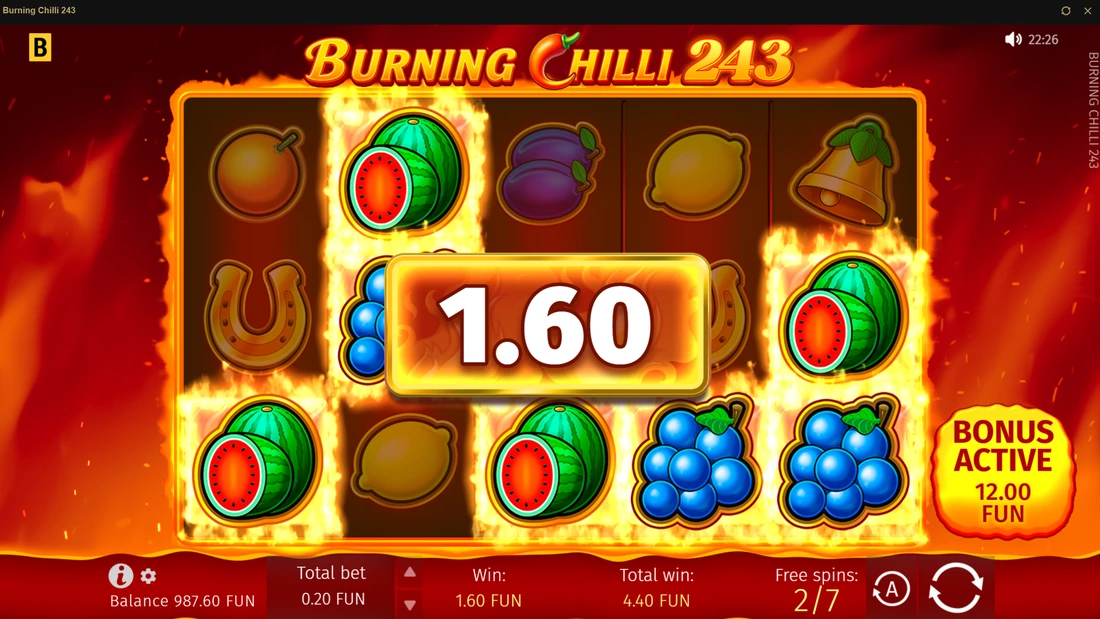
Burning Chilli 243 by BGaming is a good example of a All-Ways-Pay slot.
The New Frontiers: Slots That Defy Traditional Winlines
The most innovative mechanics have entirely removed the reel-and-line structure, focusing instead on dynamic symbol groupings or unique payout formulas.
4. The Dynamic Giant: Megaways™
Developed by Big Time Gaming, the Megaways mechanic is one of the most significant innovations in the industry. It introduced a volatile, high-potential method of winning:
Dynamic Reels: With every spin, the number of symbols that appear on each of the six reels changes randomly (ranging from 2 to 7 symbols).
Massive Potential: This results in a constantly changing number of win lines, with the potential to create up to 117,649 ways to win on a single spin.
Volatility: Megaways slots are defined by their sheer volatility, appealing directly to players seeking massive, though less frequent, payouts.
One important detail many players miss: BTG licenses the Megaways mechanic to other providers, which is why you'll find Megaways titles from Pragmatic Play, Red Tiger, Blueprint, and others — not just Big Time Gaming themselves. The dynamic reel system also means hit frequency fluctuates dramatically spin to spin, compounding the volatility well beyond what a fixed reel count would produce.
→ We cover the full mechanics, licensed variants, and best Megaways slots in our dedicated Megaways guide.
5. The Grid Game: Cluster Pays
The Cluster Pays system is the most significant departure from the payline concept, utilizing a grid-style layout, usually larger than the standard 5 x 3.
No Paylines: Wins are not based on lines or adjacent reels.
Win Condition: Players win by landing a cluster (a group) of matching symbols that are touching each other either horizontally or vertically. A cluster usually requires 5 or more symbols to be connected.
Cascading Wins: Cluster Pay games nearly always feature Cascading or Tumbling Reels, where the winning cluster vanishes, allowing new symbols to drop in and potentially create new wins from the same spin.
For a full breakdown of how the cascading mechanic works — and how it interacts with multipliers across different reel structures — see our Avalanche and Cascading Reels guide.
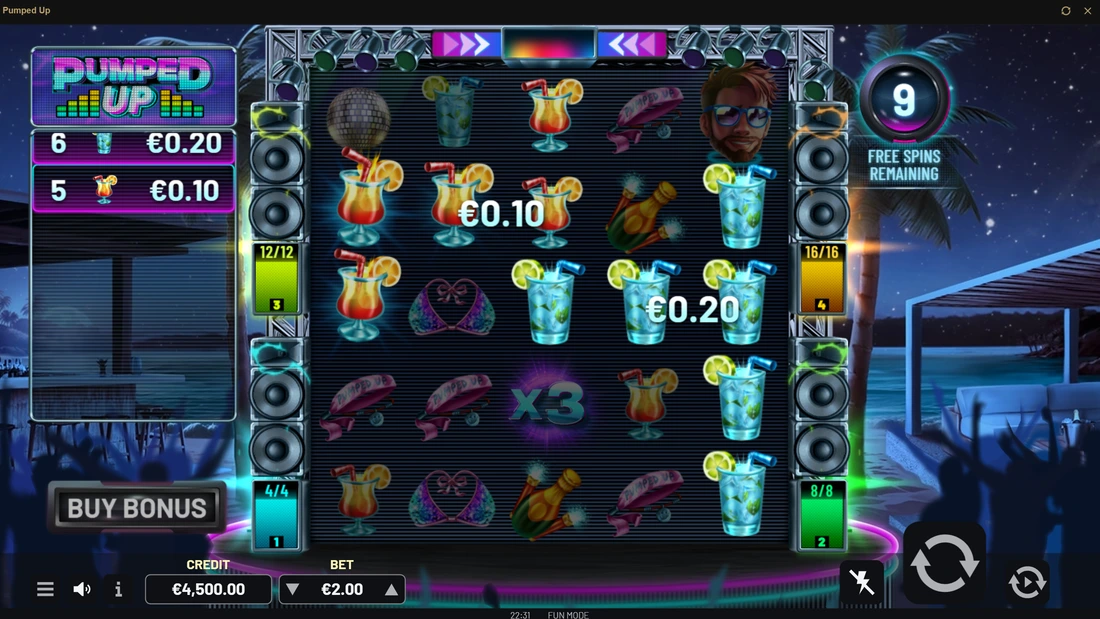
Pumped Up by Indigo Magic is a great example of a Cluster Pays mechanic.
6. The Hybrid: Poker Evaluation System
While rare, some modern slots use poker hand rankings as their core win evaluation system rather than matching symbols on reels or grids. Crescendo and Deal with Death bonus are current examples — wins are determined by the poker rank of the symbols displayed, blending slot accessibility with card game logic.
Poker Rules: The outcome of a hand is determined by a five-card hand's rank (e.g., Royal Flush, Full House) based on standard poker evaluation rules, rather than a slot machine's payline pattern. It’s a hybrid machine-based game that appeals to those who enjoy skill-based elements alongside chance.
7. The Scatter Pay System
This is the newer, broader usage that refers to a style of game where regular symbols pay out anywhere on the screen. This style is often found in modern grid slots and is distinct from Cluster Pays.
Mechanism: In these newer games (often high-volatility, grid-style slots), the core gameplay mechanic is that wins are created when the required minimum number of any matching symbol lands anywhere on the screen. They do not need to be adjacent, on a payline, or grouped in a cluster.
The Key Point: The ability to "pay anywhere" is applied to the entire paytable, effectively eliminating all paylines and cluster rules for forming a basic win.
Examples of Games using this mechanic: Popular games like Gates of Olympus or Sweet Bonanza use this "pay anywhere" or "scatter pay" system for all their fruit/gem symbols.
8. Beyond 5×3: Non-Standard Grid Sizes
The 5×3 grid is the industry default, but modern developers increasingly use larger formats to change how the game feels and pays. A 6×4 or 6×5 grid adds more symbols per spin, which increases cascade potential and allows for larger cluster formations. Some titles — particularly from Hacksaw Gaming and Nolimit City — use tall, narrow, or asymmetric grids as a deliberate design choice to amplify volatility and push maximum win ceilings higher.
The grid size itself isn't a quality signal, but it tells you something about the game's intent: bigger grids generally mean more complex mechanics, higher variance, and a larger gap between a typical session and a peak win.
The Informed Player's Conclusion
The world of slot machines has evolved dramatically, moving far beyond the simple, single-line "one-armed bandit." The core takeaway for any player is this: the architecture of the game (the reels and paylines/ways-to-win) directly determines its volatility, potential for big wins, and overall gameplay feel.
For Nostalgia and High-Risk/Reward: Stick to the 3-Reel, 1-Line Classics.
For Balance and Beginner-Friendliness: The 5-Reel, 10-Line Standard is the perfect middle ground.
For Easy Tracking and Consistent Wins: Choose the All-Ways-Pay system (like 243 Ways), where you simply look for matching symbols on adjacent reels.
For Maximum Ways to Win: Dive into Megaways™ — dynamic reels create up to 117,649 combinations per spin, with volatility that scales accordingly.
For Simplified High-Volatility Play: Try Scatter Pay / Pay Anywhere grids, where any matching symbols anywhere on screen trigger a win — no paylines, no adjacency rules.
For Engaging, Dynamic Gameplay: Try Cluster Pays games, which combine grid-based wins with fun Cascading Reels mechanics.
Understanding whether you are playing a 10-line game, a 243 Ways game, or a 117,649 Megaways game is the critical difference between a casual spin and an informed wager that matches your betting style and risk tolerance.
Recommended Slots






Frequently Asked Questions
Everything you need to know about this guide
About the Author
CEO & Co-Founder at Chase the Scatter
Former professional tennis player turned casino industry expert with over 10 years of experience in iGaming. Previously an operator at NOVOMATIC and Stanleybet Group, Borna now leads Chase the Scatter, delivering honest, data-driven slot reviews and expert gambling guides backed by real industry knowledge.