Exclusive Interview: Print Studios on Phantom Pulse, Punk Penguin, and the "Thinking Gambler"
We sat down with Joshua Nadin, Product Manager at Print Studios, to discuss their strict no-reskin policy, balancing extreme math models in Phantom Pulse, and giving players ultimate agency.


Sitting Down with Print Studios
We recently caught up with Joshua Nadin, Product Manager at Print Studios. If you know Print, you know they don't do boring. They’ve earned a solid reputation as the provider for the "thinking gambler" precisely because they refuse to pump out cheap clones or lazy reskins.
In this chat, Joshua breaks down the studio's golden rule for building games from the ground up. We also get into the nuts and bolts of Phantom Pulse—a deep-space techno banger that manages to pack massive payout potential without turning the base game into an absolute grind. Plus, we finally find out exactly whose idea it was to throw cute arctic animals into a sweaty ska-punk mosh pit in Punk Penguin. Let's get into it.
Print Studios has really built a reputation as the "thinking gambler's" provider because you guys refuse to push out cookie-cutter reskins. How challenging is it to maintain that high level of mechanical originality with every single release?
Joshua: This has always been and will continue to be the norm for us. But, it’s not without its challenges. Designing mechanics from the ground up takes significantly more time and resources than simply reskinning an old math model, but our players expect that level of depth from us. We would much rather release fewer games with maximum impact than flood the market with filler releases.
Looking at your portfolio, you clearly have a very distinct DNA. What is the one "golden rule" at Print Studios that you absolutely refuse to compromise on when developing a new concept?
Joshua: The one golden rule is that all elements of the game must serve each other seamlessly. We never just slap a random skin onto a set of features. Everything has to feel cohesive and purpose-built. If a feature feels forced or does not naturally elevate the player experience within that specific game world, it gets scrapped or heavily reworked. Quality always wins, and we refuse to compromise on that core synergy.
Phantom Pulse looks and sounds incredible. It feels like a synchronized techno club floating in deep space. How much of the game’s development was driven by nailing that audio-visual rhythm versus the pure math of the grid?
Joshua: The relationship between the audio-visuals and the math in Phantom Pulse is entirely symbiotic. You cannot have a game that looks and sounds like a deep space techno club without the gameplay matching that exact tempo. We spent many weeks fine-tuning the visual cues and audio drops to trigger precisely with the math events.
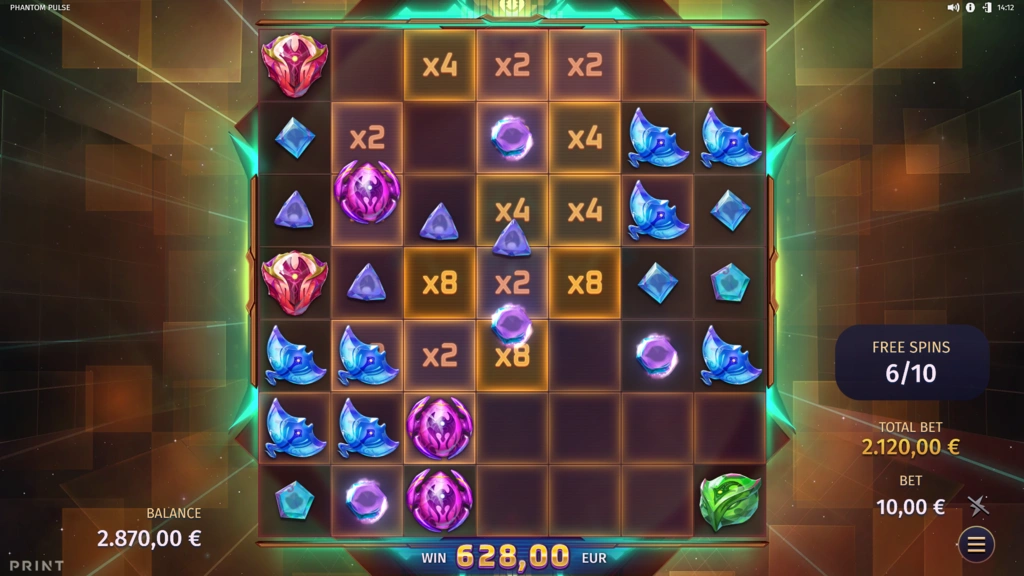
The "Morphing Clusters" feature is a massive standout. Walk us through how the team came up with the idea to expand clusters by transforming adjacent symbols, rather than just relying on the standard tumble/cascade mechanics we see everywhere else.
Joshua: We actually debuted this specific mechanic in Tarasque, and thought it could work well in Phantom Pulse also. We wanted a way to generate bigger wins and the feeling of potential without relying heavily on retriggers like in other cluster pay slots that have grid multipliers. I think the Morphing Clusters combined with the Pulse Bombs achieved this well, and captured the feeling of an infectious energy actively taking over the board.
The math model on this one is fascinating. You've got a 10/10 volatility rating and a 20,000x max win, but it still holds a really healthy hit frequency of around 32%. How tough was it to balance that aggressive, high-risk potential without making the base game feel like a punishing grind?
Joshua: Balancing math to feel good is always one of the biggest challenges during development. The default route here is often a brutal base game, but we strongly believe that high risk should not equal a boring experience. We adjusted and playtested the math a lot to hold that hit frequency so players still get regular action and feature teasers. It keeps the entertainment value high and the base game highly engaging while you hunt for that massive payout.
Punk Penguin is such an awesome subversion of the typical "cute arctic animal" slot. What exactly inspired the team to throw a bunch of penguins into a hardcore, Californian ska-punk mosh pit?
Joshua: Punk Penguin is actually the brainchild of our resident QA tester, Dennis! The arctic animal theme has been done to death, usually in a very soft and cuddly way. He thought it would be refreshing to throw these cute penguins into a sweaty, chaotic ska-punk mosh pit. It gave our art and sound teams absolute freedom to get weird with it, and that rebellious energy translated perfectly into the gameplay.
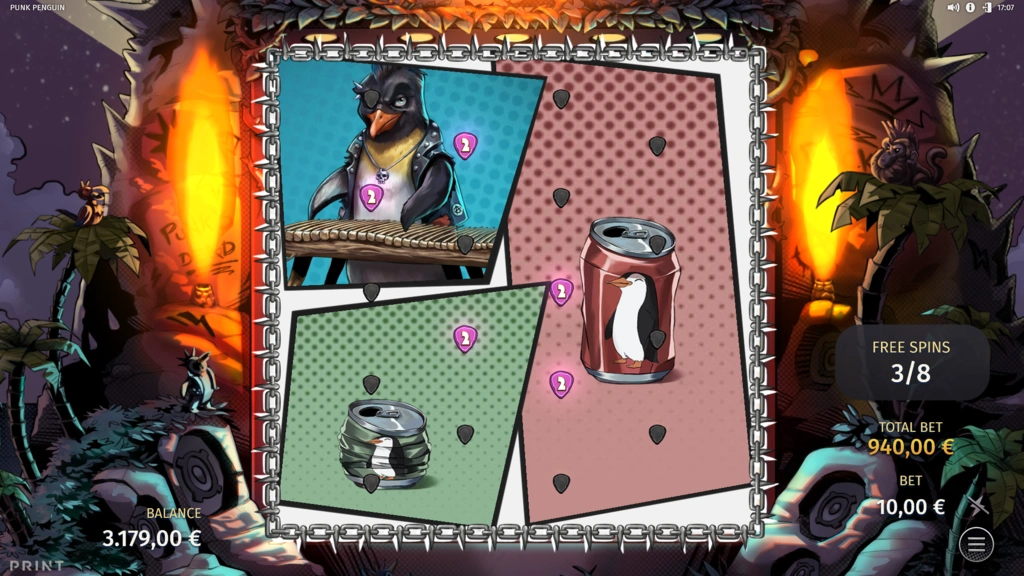
We’re stoked to see your signature SuperSpinners™ return in this release, especially alongside chaotic modifiers like Stage Dives and Power Slides. How did you tweak or evolve the SuperSpinners engine to fit the frantic energy of this specific game?
Joshua: SuperSpinners are a huge part of our identity, but they need to adapt to their environment. For Punk Penguin, the standard smooth operation of the engine did not fit the chaotic punk vibe. So we designed modifiers like Stage Dives and Power Slides to directly interact with the SuperSpinners.
We noticed the interactive free spins feature gives players a bit of a choice in how they play. What was the design goal behind giving players that extra layer of control over the volatility during the bonus round?
Joshua: The thinking gambler appreciates agency. We know our players are deeply engaged with the mechanics, so giving them a choice during the free spins feels like a natural progression. Allowing players to dictate their own volatility and tailor the bonus round to their personal risk appetite adds a great strategic layer. It fits perfectly with the punk attitude of the game too, giving the player the power to play by their own rules.
You’ve already set a massive standard for 2026 with these two games. Without spoiling too many secrets, what does the rest of the year’s roadmap look like? Are there any brand-new mechanics you’re itching to unleash on the market?
Joshua: We are definitely keeping our foot on the gas. You can expect us to continue pushing boundaries with high-quality, bespoke productions. We have some brand new, super exciting projects currently in development, alongside a sequel or two that you might not be expecting. Keep your eyes peeled in the near future!
Looking at the bigger picture, what is the ultimate endgame for Print Studios? Where do you see yourselves sitting within the wider iGaming landscape three to five years from now?
Joshua: Our ultimate endgame is to be recognized universally as the benchmark for premium slot development. Print Studios is already often the name players and operators immediately think of when they talk about mechanical innovation and uncompromised quality. We do not need to be the biggest studio in the world in terms of sheer output volume, but we absolutely want to always strive to be the best.
Wrapping Up: What’s Next for Print?
A massive shoutout to Joshua for taking the time to talk shop with the Chase the Scatter community. It's always great to hear from a team that actually cares about keeping things fresh rather than just churning out the same old features. The fact that they prioritize giving players real agency—and actively work to balance intense swinginess so you aren't just falling asleep while hunting for the bonus—really shows in the final product.
With their 2026 lineup already looking stacked, including some brand-new mechanics and a couple of completely unexpected sequels, Print is definitely keeping their foot on the gas. Go give Phantom Pulse and Punk Penguin a spin, and stick around for more exclusive developer interviews!