Rebellious Slots and Arcade DNA: An Interview with JINX Gaming CEO Reu Wilde
Read our exclusive interview with JINX Gaming CEO Reu Wilde. Discover how this new studio is shaking up the iGaming world with arcade-style slots like Dead Headz and Jumpasaurus! on Hacksaw's OpenRGS platform.

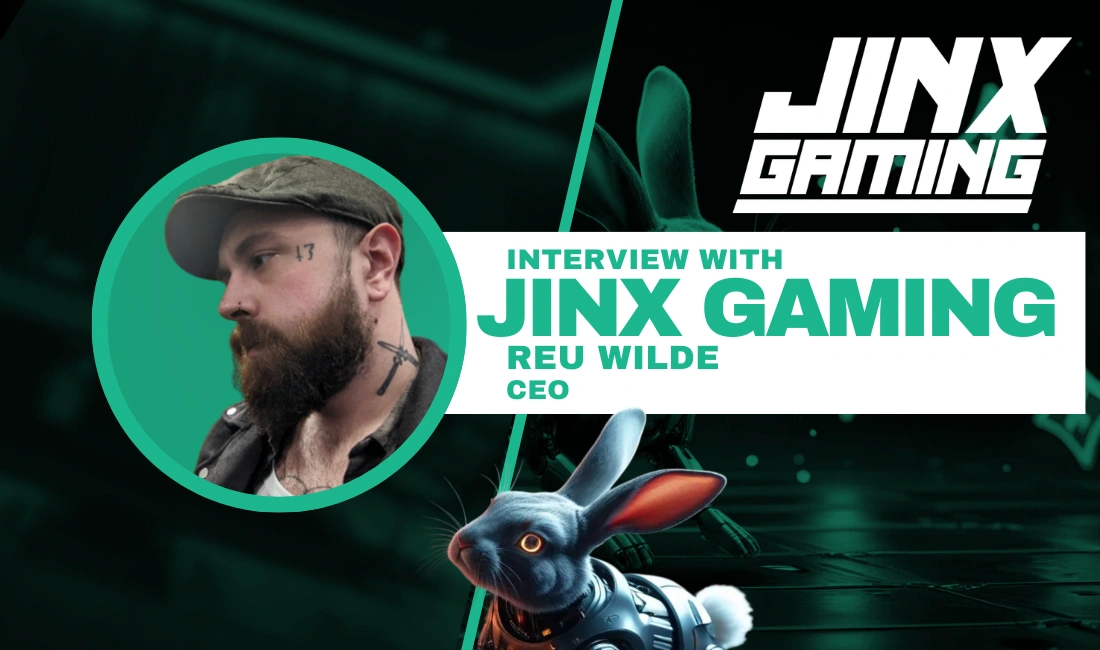
I recently had the opportunity to sit down with Reu Wilde, CEO of JINX Gaming, to discuss the studio's explosive and highly anticipated entry into the iGaming industry. If there is one thing that becomes immediately clear about JINX Gaming , it is that they have absolutely no interest in playing it safe or conforming to the polite standards of traditional casino game studios. Born out of a deep frustration with corporate bloat and the endless reskinning of existing online slots , this rebellious team is on a mission to bring raw, arcade-style energy directly to the reels.
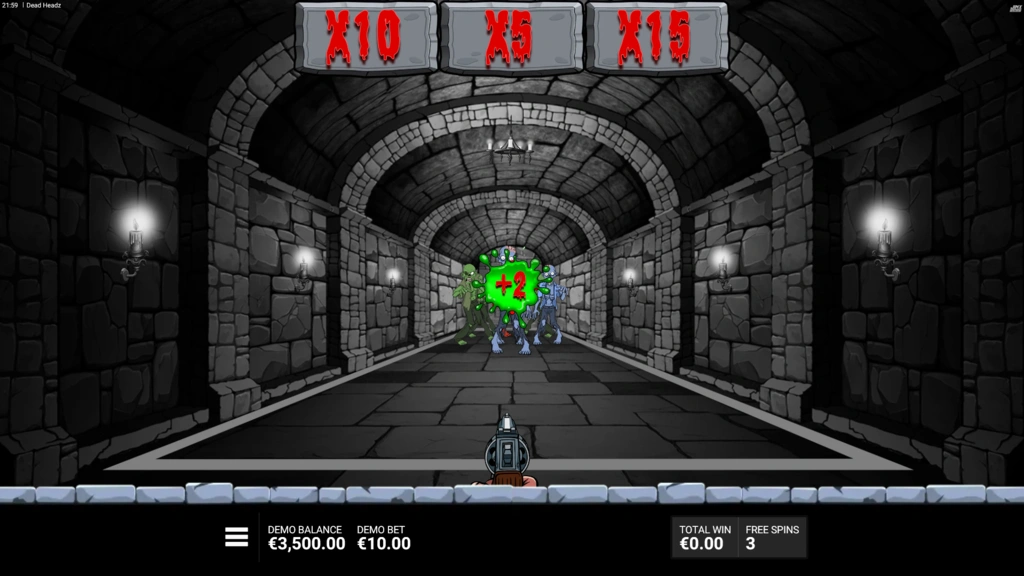
Launching as a brand-new partner on Hacksaw Gaming’s OpenRGS platform , they have already turned heads with their striking, black-and-white debut title, Dead Headz, a high-octane zombie FPS slot. Now, they are shifting gears with their vibrant, prehistoric follow-up, Jumpasaurus!. In our exclusive conversation, Reu opens up about the unapologetic attitude behind the studio's name , why they rely on actual playtime over abstract math spreadsheets to balance their high-volatility slots , and their overarching goal to keep developing the weird, nostalgic new slot games they actually want to play.
Read our full Q&A below to dive into the mind of a studio that is actively rebelling against the soulless, plastic clones of the current market.
The Story Behind the Name
"Let’s start with the identity. The word 'Jinx' traditionally implies a curse or bad luck. What is the story behind choosing JINX Gaming as the studio name? Is it a playful nod to the volatility of gambling, or does it represent a deeper philosophy for the team?"
Hahaha, I wish there was some epic, life-changing story behind it. The truth? We just wanted something short, punchy, impossible to ignore. Jinx hits. It sticks. It’s a little dangerous. And it doesn’t care about being polite.
JINX, to us, is more of an attitude. All of the b******t corporate bloat that prevents other studios from straying too far from “what works”? Yeah - we don’t care for that.
We turned up, made a first-person-shooter slot game as our first game - and we did it as a middle finger to bosses we’ve worked for who wanted us to reskin the same 3 pots game - AGAIN.
JINX is a hangover at work or turning up red-eyed after a lunch break. JINX is working in pyjamas and bathrobes fit for a cult leader. JINX is the studio equivalent of a mad scientist’s laboratory. JINX is everything they tell you a “proper studio” shouldn’t be - yet here we are.
The Hacksaw Alliance
"Launching as a new partner on Hacksaw Gaming's OpenRGS is a massive endorsement. How did this partnership come about, and how has their infrastructure allowed you to achieve the high production value we saw in your debut right out of the gate?"
There wasn’t some long, boring corporate courtship. We slid into Hacksaw’s DMs on LinkedIn, showed them what we were cooking, and said, “Here’s what we do.” They took the chance on us - and we ran with it - and we hope we’re making them proud.
From day one, we didn’t want to ease in with some safe, watered-down st that we wouldn’t play - we wanted to make something with b*s. And thanks to Hacksaw’s OpenRGS, we could do exactly that. Their platform handled the tech headache, leaving us free to focus on weird ideas and mechanics.
It felt less like a publisher deal and more like being handed the keys to an engine - and being told to “make something cool” - and thats what we are doing.
"The industry is incredibly crowded. Beyond just visual polish, what do you believe is the core 'DNA' of a JINX game that will make players recognize your work instantly a year from now?"
Our games are weird, freaky mutations that come from splicing video games, arcades and slots. It’s that simple.
We don’t sand off all the sharp edges to make it appeal to mass markets or make it safe for key demographics.
Our games are a little raw. We are closer and more emotionally invested in our products than any other studio I have worked with — because we aren’t just standing on the shoulders of others — reskinning their games — tweaking math models — changing which ancient Greek god is at the side of the reels — or slapping some film characters over someone else’s gameplay and calling it “innovation”.
Part of what we are trying to do, that should show in our games, is that we are not trying to be professional. You see new studios, all the time, trying to act like a big company — trying to make something super-glossy, intensely-polished and hyper-commercial while saying something about “we make what we’d want to play” — but that polished, glossy, commercial product is exactly the opposite of making something personal.
"Dead Headz launched with a striking black-and-white aesthetic that felt like a vintage horror comic. What was the decision-making process behind choosing such a risky, non-traditional look for your very first title?"
We keep hearing that word - “risk”. We honestly never stopped to question if it was risky. We wanted a zombie FPS slot. We couldn’t find a zombie FPS slot. Figured other people probably want a zombie FPS slot. We made a zombie FPS slot.
Dead Headz’ black-and-white horror comic style wasn’t about shock value. It was about actually having some personality. It was to make sure players knew this game wasn’t here to blend in with the sea of other zombie games.
For a debut game, standing out was everything. The market is full of polished, soulless, plastic clones. We turned up, took a classic aesthetic, pushed it to the edge, and made something instantly recognisable and undeniably fun.
Innovation in Mechanics
"The 'Shoot & Loot' bonus round introduced a tower-defense style element that is quite rare in slots. What were the biggest challenges in balancing an arcade-style survival game with the math model of a high-volatility slot?"
I’ll be honest — I don’t design from the math model.
Math models always sound good on paper — I absolutely get the gist of what they are — but I can’t explain the difference between “1 in 185 entry to bonus” and “1 in 200 entry to bonus” in the abstract, without just playing the game and feeling the timing of it alongside everything else. I just play it, ask for tweaks, make compromises — until it feels good.
The balance comes from playtime, not spreadsheets. We tune our games until it has that proper arcade tension: most runs end fast, some go deep, and every now and then you hit a run that feels heroic. That maps surprisingly well to high-volatility slot math when you let it.
"Reviews for Dead Headz were positive but noted a lack of flexible Bonus Buy options compared to other Hacksaw titles. Is this something the team is looking to expand on in future updates or upcoming releases to give players more choice?"
For Dead Headz, and with other upcoming games, when we’re doing something genuinely different we’re not going to fragment the experience with multiple bonus entry points. We want players to learn the game the same way we do — by engaging with the core loop — and we want clean feedback on whether a new idea actually works. That means focus first: quick lessons, clear answers — does this work, yes or no?
If we were to release Dead Headz 2 then absolutely, we’d look at expanding the mechanics and bonus options. But when you’re doing something new for the first time, you want to know exactly what’s carrying the experience — and what we learned here is that Shoot & Loot definitely works.
The 'One-Scatter' Revolution
"In Jumpasaurus!, you’ve introduced a unique mechanic where a single Scatter found inside a Mystery Symbol triggers the bonus. Why did you decide to break away from the traditional '3-Scatter' rule, and how do you think this changes the player's anticipation during the base game?"
So the way we looked at it was that it was the one worthwhile element from the current “3-pot” plague that we could actually work with.
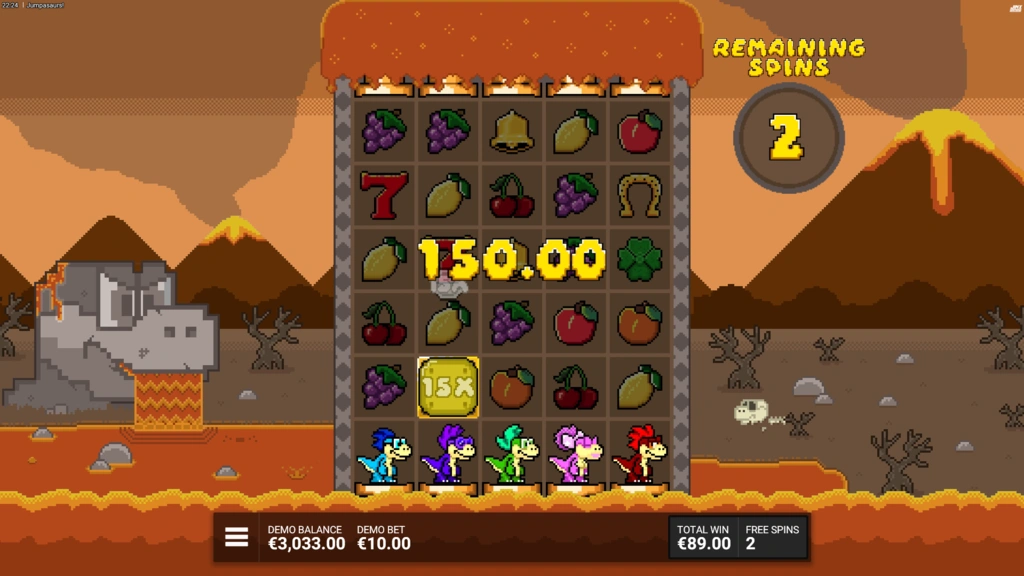
In 3-pot games, any one scatter can trigger a bonus — but it’s not guaranteed to. We took that idea and tweaked it. Now any one Mystery Symbol can trigger the bonus — it’s still not guaranteed — but it is guaranteed to give the player something if it’s collected by one of the Jumpasaurs.
What interested us was how that would change player anticipation in practice. Every Mystery Symbol becomes a potential entry ticket. Maybe that dulls the suspense. Maybe it increases it. Honestly? Probably both — some players will love it, and others will hate it.
In this industry, we tend to talk about player reaction as a single, monolithic truth. Dead Headz has already shown us that isn’t the case — especially when you introduce new mechanics. There are averages, sure — “players react like X when Y happens” — but those averages usually just funnel you back into doing the same thing over, and over, and over.
Either way, we’ll listen to feedback and see where it leads. Maybe we come back with Super Jumpasaurs! somewhere down the line. Time will tell — but either way, we think it’s fun.
"Our preview noted that a single Mystery Symbol in the base game can reveal up to 1,000x in coins. With that kind of potential available on any spin, how difficult was it to balance the math model while still maintaining the game's high max win of 10,000x?"
With up to three active reels in the base game ready to collect Mystery Symbols, you’re already looking at potential wins of 3,000x plus any standard paylines on the same spin — which is pretty decent. The full 10,000x max win is reserved for the bonus game, when all five reels are active and luck aligns perfectly.
For us, balancing isn’t just a math exercise; it’s an art. Spreadsheets can tell you probabilities, but if it doesn’t feel right to play, none of that matters. Jumpasaurs! started with a 5/5 volatility rating, but we reduced that to 4/5 because it just didn't feel right. We spend so much time playing, tweaking, and feeling out the tension. That’s how we ensure the game is exciting, and keeps players leaning in, not just waiting for the next big hit.
It’s also about pacing and drama. We want every spin to feel like it could be the one that changes everything — but players shouldn’t feel helpless or frustrated. By carefully tuning base-game potential versus bonus-game extremes, we create a rhythm where the game teaches, teases, rewards, and surprises in equal measure. That dynamic tension is what keeps players engaged and makes the big wins feel fun.
A Massive Tonal Shift
"Moving from the gritty, monochromatic horror of Dead Headz to the vibrant, cute prehistoric world of Jumpasaurs! is a huge shift. Was it a conscious strategy to show the market immediately that JINX Gaming won't be pinned down to a single genre?"
Well yes, and no. You aren’t wrong - Dead Headz and Jumpasaurs! look worlds apart - one’s a gritty, monochrome horror comic, the other a bright, playful, pixelated prehistoric romp. But underneath, it’s the same arcade DNA. Both born in the same place of inspiration, just taken in different directions.
Where Dead Headz feels like a light-gun shooter, tense and brutal, Jumpasaurus! leans into platformer chaos, playful and unpredictable.
So while it shows that JINX won’t be pinned down to a single aesthetic, it’s really about exploring that arcade spirit in multiple ways — letting each game be distinct while still unmistakably us.
The Road Ahead
"You’ve started the year with zombies and dinosaurs. Without giving away too many secrets, what is the primary goal for the studio for the rest of 2026? Are you aiming to fill a specific mechanical niche, or just purely experiment?"
We don’t have any grand scheme. There is no end goal. We have, at this moment, about 20 games mapped out and we’re just hoping to put a dent in that roadmap.
We are just making games because we love making games. More specifically, we love making our games. The goal is to be able to keep making our games, and hopefully bring some more people in to help us build even more games. That’s it.
What is that in corporate speak? “We are product people first, and our goal is to become a long standing player in this space”? Something like that?
We’re inspired by retro video games, arcades, and old cartoons — so in 2026, expect fun, weird, and different games from us. If you miss the 80s or 90s, slime, morning TV, chaotic characters, gross-out humour, toys with your cereal, nu-metal, and pop punk — you’re going to want to watch what we’re doing. That’s for sure.
A Bold Future for JINX Gaming
It is overwhelmingly clear from speaking with Reu Wilde that JINX Gaming is not here to play by the traditional rules of the iGaming industry. By actively rejecting corporate bloat and safe, cookie-cutter mechanics, they are carving out a distinct and unapologetic niche. Their partnership with Hacksaw Gaming via the OpenRGS platform provides the necessary technical freedom for the team to fully lean into their raw, arcade-inspired DNA without compromise.
From the gritty, high-octane zombie survival experience of Dead Headz to the chaotic, prehistoric platforming of Jumpasaurus!, JINX proves that taking creative risks and prioritizing genuine gameplay tension over abstract math models yields thrilling results for players. As they look ahead to the rest of 2026, their 20-game roadmap promises even more nostalgic, weird, and boundary-pushing content heavily inspired by 80s and 90s pop culture.
If their debut titles are any indication, JINX Gaming is well on its way to becoming a standout, long-standing player for fans seeking something remarkably bold. We will definitely be keeping a close eye on their upcoming releases, and players who crave innovation, heavy volatility, and genuine personality in their online slots should undoubtedly do the same.