Hacksaw Gaming OpenRGS Partners: Interview with 4 Rising Slot Developers
Get exclusive insights from the minds behind Pineapple Play, Bullshark Games, Kitsune Studios, and JINX Gaming. Discover how these independent studios are redefining player retention and game mechanics.


Four Studios, One Platform: The Hacksaw OpenRGS Roundtable
The iGaming industry is evolving at breakneck speed, driven not just by established giants, but by a rising wave of agile, forward-thinking independent studios. At the forefront of this creative shift is Hacksaw Gaming’s OpenRGS platform, which has rapidly become a premier incubator for some of the most innovative new developers in the casino space. By providing a robust technical backbone, OpenRGS allows these emerging creators to focus entirely on what they do best: pushing the boundaries of game design, mechanics, and the ultimate player experience.
To get a pulse on where the industry is heading next, we gathered the minds leading four of the most exciting studios currently operating under the OpenRGS umbrella. Sitting down for this exclusive roundtable discussion are Cameron Fraser, CEO of the brand-focused Pineapple Play; Andre Villandberg, CEO of the progression-driven Bullshark Games; Phillip Douglas, CEO of the thematic and dynamic Kitsune Studios; and Reu Wilde, CEO of the horror-inspired JINX Gaming.
In this candid conversation, these four leaders pull back the curtain on their creative processes. We dive into their absolute favorite game releases so far, explore the secret sauce behind long-term player retention, and tackle the highly debated influence of casino streamers on modern slot development. Finally, they reveal where they are pushing their chips for the future of iGaming trends—from stateful gameplay to niche dominance—before wrapping up with a rapid-fire "Blitz" round that tests their personal and brand boundaries.
Whether you're a player looking for the next big hit or an industry insider tracking the future of slots, this is a conversation you won't want to miss.
Industry Questions
1. Looking back at everything you've built so far, what is your absolute favorite game your studio has released, and what makes it so special to you?
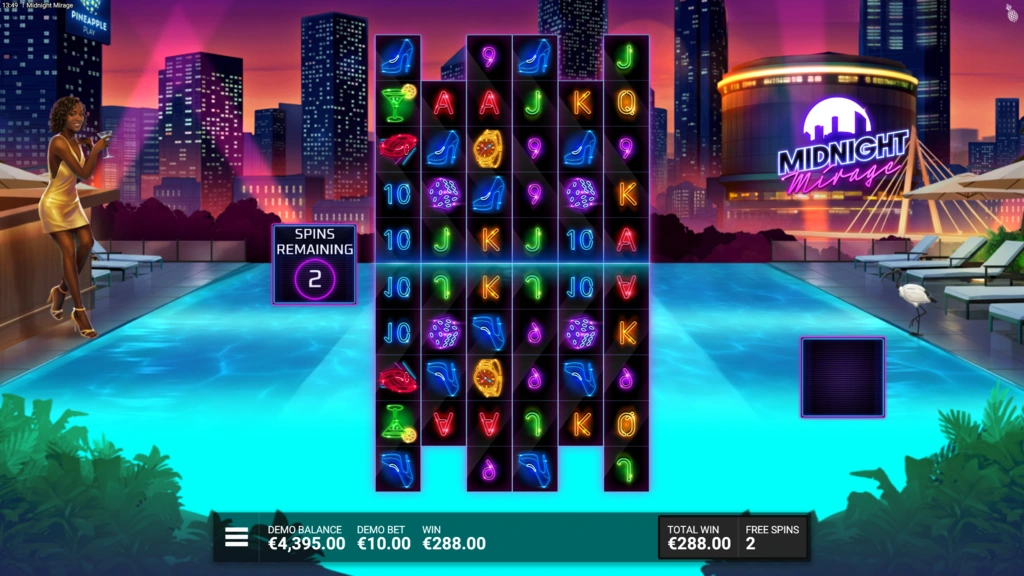
Cameron Fraser: It's still early days for Pineapple Play. We have two releases under our belt, but Midnight Mirage holds a special place for me. It was a mechanic I'd been wanting to try for a number of years, and the theme with the rooftop bar, infinity pool, city lights came together perfectly.
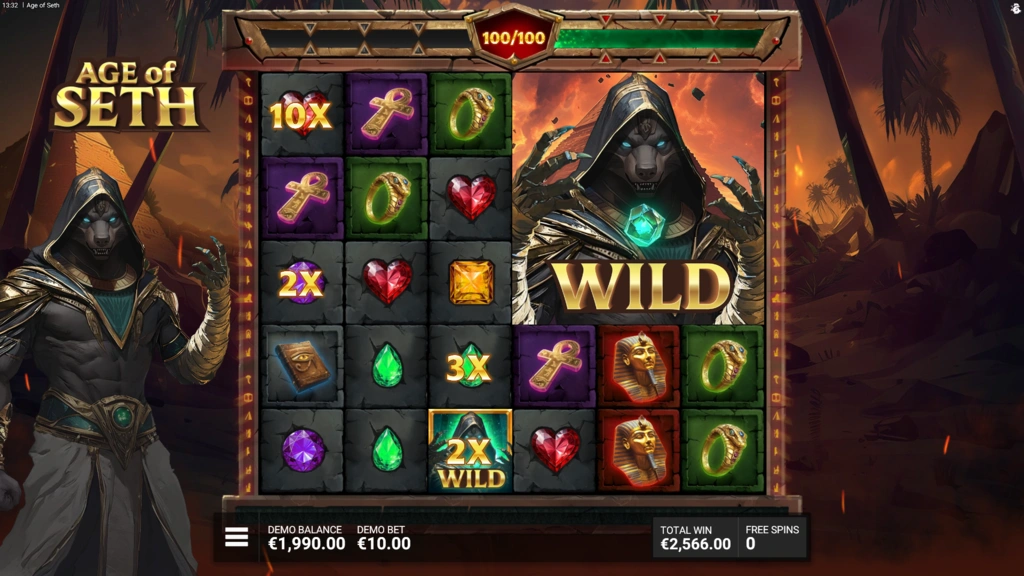
Andre Villandberg: Age of Seth is still my favorite. It’s the game where everything really came together for us: progression, volatility, theme, and pacing all working in sync. It starts quite controlled, but once it opens up, it can go completely wild. That contrast is something we care a lot about. It’s also one of those games where you don’t fully “get it” until you’ve played a few sessions, and then it clicks. That’s when you know it has depth.
Phillip Douglas: Right now, it has to be the upcoming sequel to our first game, “The Library Overdue.” It’s the first time we’ve really managed to align everything—mechanics, theme, and identity—into something that feels distinctly Kitsune. The whole “Overdue” concept gave us a framework where mechanics aren’t just systems, they’re part of the fantasy we’re building.
We’ve also taken Hacksaw Gaming’s Stackways-style mechanics and evolved them in a way players haven’t seen before, so I’m confident it’s going to land well. What makes it special to me is that it’s not just a game we built—it’s a direction. If you put our first game, “The Library,” side by side with “The Library Overdue,” you can clearly see not just a strong sequel, but a snapshot of how much Kitsune has evolved over that 16-month period.
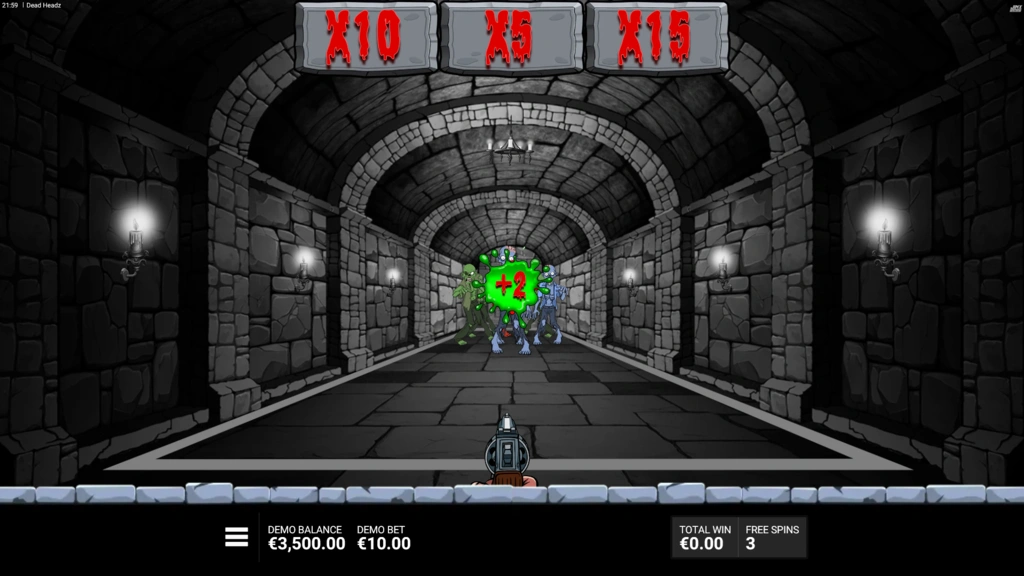
Reu Wilde: We’re still early in our journey, so I don’t think I can fairly pick a ‘best’ game yet—but Dead Headz will always have a special place in my heart.
It was our first release as a team, and there’s something you just can’t replicate about that. Every decision felt bigger, every challenge felt new, and we were figuring things out in real time. It wasn’t just about shipping a game—it was about proving to ourselves that we could actually do this.
What makes Dead Headz stand out to me is how unapologetically different it is. We didn’t try to play it safe or follow a template—we leaned into a distinct theme and identity, and that set the tone for how we think about games as a studio. In a way, it defined our DNA early on.
That said… what we’re building right now is pretty f*****’ cool too.
2. Let's talk about player retention and what makes a slot 'stick'. Some studios at this table have already built their brand around a specific 'signature' mechanic. For those who have one, what's the secret sauce behind its retention power? And for the studios that don't have a specific trademark feature yet—is that a conscious design choice, or can we expect you to debut a brand-new, signature mechanic in 2026?
Cameron Fraser: At two games in, we're observing what players respond to, what features perform, and we’re taking feedback seriously. We work in an agile way that lets us build quickly on what’s landed well and while we haven’t released a signature mechanic yet, we do have a novel mechanic in the pipeline that we’re really excited about. Whether it become our signature, time will tell.
Andre Villandberg: For us, it’s less about one signature mechanic and more about a consistent feeling across our games. That sense that something is always building. We use different tools to get there. Sometimes it’s multipliers, sometimes it’s collections or progression systems, but the goal is always the same: give players a reason to stay for one more spin.
We’re not trying to force a “trademark feature” just for branding. If something naturally becomes associated with us, great, but it has to come from what actually works, not from trying to plant a flag.
Phillip Douglas: We’re very conscious about not forcing a “signature mechanic” too early—but looking ahead, you’ll start to see one or two emerge from us over the next year. A lot of studios find something that works and build around it, which can be incredibly powerful, but it can also limit creative exploration if you commit too soon.
For us, the focus has been on developing mechanics that can evolve and grow over time. So yes, we will absolutely have mechanics that players begin to associate with Kitsune. But they’ll come from refining what players genuinely respond to, not from deciding upfront what our “gimmick” should be.
We pay close attention to how players react—not just to mechanics, but to the full experience: the games, themes, and music. Our priority is always to maximise player enjoyment. At the end of the day, players and partners are who we build for, and their engagement matters most to us.
Reu Wilde: Haha, I don’t know if we can claim a single ‘signature mechanic’ just yet - but we are definitely starting to be recognised as the arcade-slot guys. If you actually dig into player feedback on our games, what stands out isn’t one specific feature - it’s that people talk about the feel. They mention the personality, the energy, and the fact that our games genuinely make them smile. That’s something we care about a lot. I think that comes from what I’d call ‘respecting the source material.’
We don’t just take a theme and wrap it around a standard slot. If we’re building something inspired by arcade shooters or platformers, we really lean into it - mechanically, visually, and sonically. So whether it’s the lightgun, reactive feel of Dead Headz or the pixel-art platformer vibe of Jumpasaurs, the goal is always the same: make it feel like a game first, and a slot second. That cohesion is what gives it sticking power. Players can tell when something is intentional - when the mechanics, art, and audio are all pulling in the same direction.
It creates a more immersive experience, and I think that’s what keeps people coming back. As for a ‘signature mechanic’—I’d say we’re less interested in forcing one, and more focused on building a signature style. If we do our job right, players should be able to recognise a JINX game within seconds, regardless of the mechanic. That said… we’re definitely not done experimenting. I wouldn’t rule out us landing on something that becomes a true hallmark in the future.
3. Casino streamers on Kick and Twitch have a massive impact on which slots become hits. How much do content creators dictate your game design? Do you actively build games to look entertaining on a livestream, or do you strictly focus on the everyday player's experience?
Cameron Fraser: I respect the streamer community and the valuable role they play in this industry. The gaming experience is absolutely part of how I think about a game, how it reads on screen, whether the big moments land visually, whether there's enough energy to make someone want to keep watching. Midnight Mirage leaned more in that direction. For me though, a great slot should be entertaining to play and entertaining to watch. I don't think those have to be separate game design goals. When you nail the player experience, the watchability tends to follow.
Andre Villandberg: They definitely matter, but we don’t design games for streamers. If you focus only on what looks good on a big win clip, you risk building games that don’t hold up in real sessions. We care more about how a game feels over time: the pacing, the near-misses, the progression. That said, if a game is genuinely exciting, it will naturally translate well on stream. You don’t need to force it.
Phillip Douglas: Streamers matter—ignoring that would be naïve. Even more so when we’re regularly in streams on platforms like Kick, either lurking or actively engaging with streamers and their audiences. They’re essentially stress-testing your game in front of thousands of people in real time.
You immediately see what creates tension, what builds hype, and what falls flat. And in our case, if the game doesn’t pay… we get all the blame live in 4K. That said, we don’t design for streamers—we design for moments. Big swings, visual clarity, readable progression, and mechanics that build anticipation. Those things naturally translate well on stream. If a game only works when someone is shouting over it, it’s not a good game. The everyday player's experience still comes first. But if you get that right, it should be entertaining whether you’re watching a stream or playing on your own device.
Reu Wilde: Honestly, they don’t dictate our game design. Not because we don’t value streamers—they’re a huge part of the ecosystem—but because we believe fun is universal. At the end of the day, no amount of hype can save a bad game. You might get a spike in attention, but players won’t stick around. On the flip side, a genuinely good game will find its audience - whether that’s through streamers, word of mouth, or players discovering it themselves.
We design for the player first. The person playing on their phone, in their own time - not an audience watching someone else play. Because if that core experience is solid - if it feels good, looks great, and has personality - it will naturally translate well to streaming anyway. I think sometimes studios fall into the trap of designing ‘moments’ for clips - big flashes, big reactions - but without the underlying depth. That’s not something we chase.
For us, it’s about building something that’s consistently enjoyable, not just occasionally viral. The funny thing is, when you get that right, streamers tend to pick it up anyway. Because they’re looking for the same thing - games that feel good to play and get real reactions. So we don’t design for streamers—but we’re very happy when what we build resonates with them.
4. If you had to push all your studio's chips to the center of the table tomorrow and bet on one single iGaming trend for the next 3 years, what would it be and why? Would you bet on the explosion of Crash games, AI-driven mechanics, a return to low-volatility classics, or do you have your own 'dark horse'?
Cameron Fraser: The obvious answer is AI as it is already integrating with infrastructure across the industry and the next step of enabling gaming personalisation to align with player preferences is inevitably on the horizon. More players are mobile first, and a game design with mobile first in mind will increasingly be the focus. The social layer is real too, players want to share experiences, and that is likely to continue to drive a rise in slot streaming.
If I'm pushing my chips all in on something that doesn't get talked about enough, my dark horse is strong brand identity. As the market gets noisier and the barrier to entry keeps dropping, I think the studios that break through are going to be the ones players recognise and seek out because of a distinct visual language and feeling associated with the brand. That's very much what we’re doing at Pineapple Play. Building a brand players and operators seek out, rather than volume that gets lost in the noise.
Andre Villandberg: If I had to bet on one thing, it would be progression-based systems that extend beyond a single spin or bonus. Players are getting more used to systems that build over time: levels, collections, evolving features. Not in a gamified, overcomplicated way, but in a way that gives sessions more meaning. Crash games will keep doing well, and AI will play a role behind the scenes, but I think the real shift is making slots feel less like isolated spins and more like connected experiences.
Phillip Douglas: If I had to go all-in on one thing, it’s stateful gameplay—mechanics that persist, evolve, and carry weight over time. Not necessarily AI in the buzzword sense, but systems that feel responsive and dynamic. Players are getting more sophisticated—they don’t just want spins, they want a sense that their session has shape.
At the same time, I honestly believe entertainment value is the real trend driving everything forward. Players want strong themes and the full experience that comes with them—the visuals, the music, the feel of the game as a whole. That’s something we’re leaning into heavily. You can expect more theme-driven content from us, backed by high-quality visuals, music, and mechanics that all work together to deliver a genuine entertainment experience.
Reu Wilde: If I had to push all my chips in on one trend, it wouldn’t be a mechanic—it would be segmentation and niche dominance. The market is getting saturated with similar-feeling games. Whether it’s Crash mechanics, AI features, or classic math models, those can all be copied. What’s much harder to replicate is a studio that owns a specific audience.
Right now, most studios are competing horizontally—everyone making a bit of everything. I think the real opportunity is vertical: pick a niche, go deep, and become synonymous with it. For example, I’m still surprised no one has truly claimed ‘horror slots’ as a category.
Not just reskinned Halloween games, but a studio that fully commits to horror—tone, sound design, mechanics, progression. In a world where distribution is crowded, identity is your moat. The studios that win won’t just build games people play—they’ll build games a specific audience actively seeks out. That’s much harder to copy than any single feature.
Blitz Questions (This or That and Why)
Releasing one perfectly polished 'AAA' game every few months OR pushing out a solid, simpler game every three weeks to stay relevant - and why?
Cameron Fraser: Absolutely a polished game every few months. That comes down to our core value of quality over quantity. We will only release a game we are proud of. Some of those may have simpler mechanics, but they will always be top quality.
Andre Villandberg: Simpler game every three weeks, but with a caveat: they need to have something memorable so players have a reason to come back.
Phillip Douglas: Although we’re starting to ramp up the number of games Kitsune releases, the quality, the polish—everything—is improving with each title. Releasing more games is never an excuse for lowering standards. A real studio should be able to deliver consistently high-quality products at scale.
That’s something we hold ourselves to internally. It’s also the standard set by Hacksaw Gaming—they consistently release top-quality games at a high cadence, and that’s the level we’re aiming to match.
Reu Wilde: A mix of both - to me, it’s not really a choice between the two—it’s about raising the bar on what ‘high frequency’ can look like.
Simple doesn’t have to mean rushed or low quality. You can absolutely build games that are streamlined and polished at the same time. What we’re not interested in is pushing out a constant stream of forgettable products just to stay visible.
The goal for us is to build a team and a pipeline that can consistently deliver games that feel polished, fun, and genuinely unique—at a cadence where most studios would normally be putting out reskins.
That’s the sweet spot. Not one ‘AAA’ every few months, and not churn either—but a system where quality becomes repeatable, and I genuinely believe it’s possible. But it’s not easy—it takes strong creative direction, tight production, and a team that really understands what makes a game feel good.
Releasing a highly anticipated slot where all the premium symbols are embarrassing photos of you from high school OR a slot where the bonus round music is just you singing in the shower - and why?
Cameron Fraser: The singing. You can mute bad audio. You can't mute a late 90s haircut.
Andre Villandberg: Singing in the shower, 100%. I can at least sing a bit, so we could probably make it work. A full game with embarrassing photos… that’s permanent damage to the brand.
Phillip Douglas: Embarrassing photos—easily. There are plenty of those floating around, especially from my university days.
Considering I’ve got a streamer, Doddy the Viking, trying to shave my head as payback—even though he’s a big fan of our games—if that ever happens, it’ll just add another one to the collection. Me singing in the shower? That’s just punishment for everyone involved. To be fair, I’m already singing at my desk most days while working—so it’s no secret that my Manc accent isn’t quite up to Oasis standards. Even I wouldn’t bonus hunt that unless it max win everyspin.
Reu Wilde: Easily the first one, mate. I was a bit of a teenage heartthrob — at least in my home town’s emo scene. We’re talking 2007-Rawr XD energy: bright blue hair, fringe over one eye, Drop Dead hoodies and Criminal Damage skinnies (the ones with the skeleton hands on the butt), belt chains, checkered Vans - fully committed to the “HxC” lifestyle.
Turn those old MySpace photos into premium symbols, add a mosh-pit feature, and you’ve got a niche hit on your hands. Absolute domination among the elder-emo demographic.
The Bottom Line: Quality Over Gimmicks
If there is one clear takeaway from this roundtable, it’s that the next generation of slot developers isn't interested in simply copy-pasting what has worked in the past. While Pineapple Play, Bullshark Games, Kitsune Studios, and JINX Gaming each bring a radically different flavor to the OpenRGS platform, they are united by a singular focus: delivering deliberate, high-quality entertainment.
Whether it’s through the evolving, stateful mechanics of Kitsune, the layered progression models of Bullshark, the distinct arcade DNA of JINX, or the pristine visual identity of Pineapple Play, the consensus is clear. The future of iGaming belongs to studios that respect the player’s time and intelligence. Instead of blindly chasing viral streamer moments or forcing gimmicky trademark features, these CEOs are betting on depth, cohesive themes, and games that organically build momentum—proving that sustainable retention comes from a genuinely engaging product, regardless of the mathematical model underneath the hood.
With visionary leaders like these at the helm and the robust infrastructure of Hacksaw Gaming backing them, the next three years of slot design are shaping up to be some of the most dynamic the industry has ever seen. We can't wait to see which of their bold predictions come true.