
6 Counter-Intuitive Slot Mechanics That Break the Magic
Why do some slots feel 'broken' even when they work? We explore 6 counter-intuitive mechanics with experts from Bragg, Thunderkick, and Bullshark Games.


In the world of iGaming, we often talk about "player immersion"—that flow state where the math, the sound, and the visuals sync up perfectly. But every so often, a game mechanic comes along that feels like a glitch in the Matrix. It’s not that the game is broken; it’s that the mechanic contradicts our natural instincts.
At Chase the Scatter, we’re obsessed with the "why" behind the win. We reached out to some of the brightest minds in the industry to ask: What is the most counter-intuitive mechanic in slots today? From "the illusion of choice" to the "static cluster," here is why some features leave players feeling more confused than celebrated.
The "Static" Cluster: A Dopamine Cliff
In modern grid slots, we’ve been conditioned to expect a reaction. If you see a cluster of symbols connect, your brain immediately prepares for a "pop" and a cascade.
Borna Valent from Chase the Scatter points out a jarring exception: grid slots with cluster pays but zero cascade or avalanche feature.
"Getting a cluster win and just watching the spin end immediately always feels so strange to me. I just sit there waiting for a drop that isn't coming."
The Verdict: When a game uses a grid format but functions like a 3x3 stepper, it creates a "dopability gap." The visual language promises a chain reaction that the math engine never delivers.
The Illusion of Choice: The Pick-and-Click "Lie"
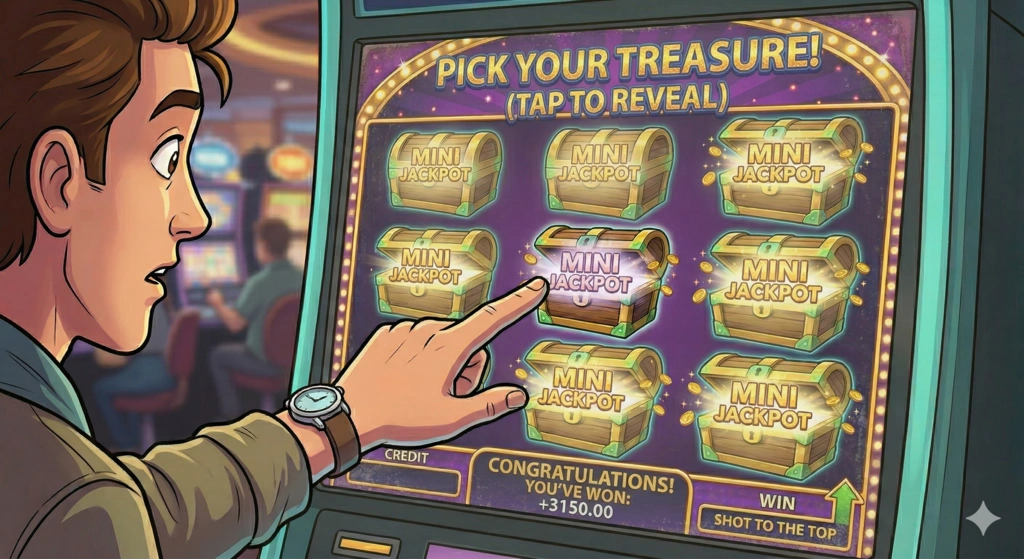
We’ve all seen it: three treasure chests on screen. You pick the middle one for a 10x win, only for the game to reveal the left chest held 500x.
Aleksandar Dašić (Head of Affiliate Marketing at Bragg) argues that in an era of interactive gaming, this "predetermined" outcome feels like a relic of the past.
"Having a manual 'click' that has zero impact on the RNG outcome feels like a relic... It creates a disconnect between the player's action and the game's math."
The Verdict: If the choice doesn't matter, don't ask the player to choose. Showing them what they "missed" doesn't build suspense; it builds resentment.
The "Invisible" Win: The Problem with Millions of Ways
More is always better, right? Not necessarily.
Mike Collins (Game Product Owner at Thunderkick) shares a controversial take on "payways" and the push for thousands—or millions—of ways to win.
"Visually it's difficult on the eyes (e.g., symbol at the very bottom of reel 1 & symbol at the very top of reel 2). Much prefer connecting payways!"
The Verdict: When symbols don't need to touch or follow a clear line, the "win" becomes abstract. If a player has to check the UI to confirm they actually won, the "Aha!" moment is lost.
Feature Stacking: The Marathon with No Finish Line
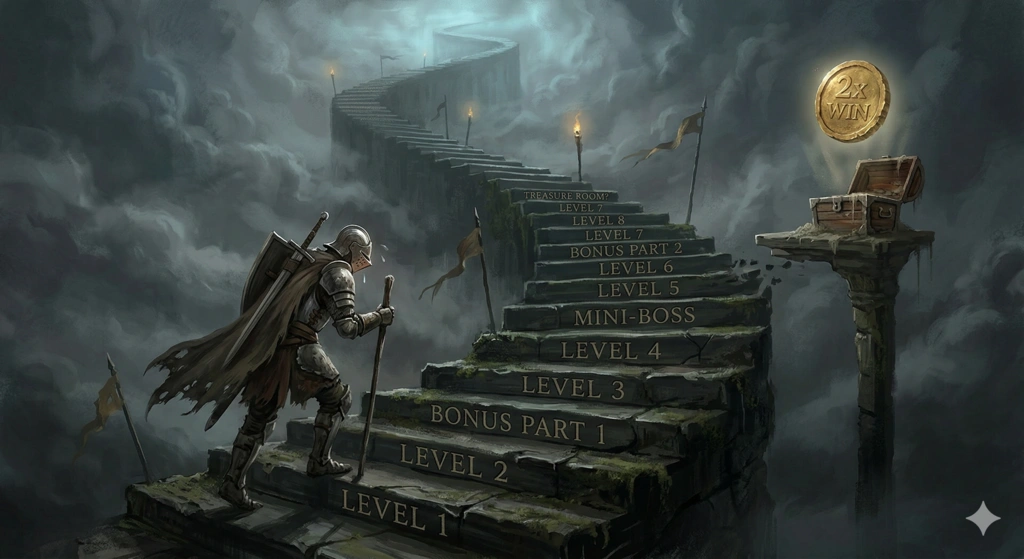
Some games, like Eldritch Dungeon, attempt to blend RPG mechanics with slots. While ambitious, Reu Wilde (CEO at JINX Gaming) notes that "feature stacking" can often feel counter-intuitive if the time investment doesn't match the reward.
"If it's long, to see if you get to part 2, and then again to part 3... with no idea of how much you're winning, then that kills any intended suspense."
The Verdict: Complexity shouldn't be a barrier to fun. If a player spends five minutes "unlocking" a bonus only to hit a 2x win, the game has failed the "Time vs. Value" test.
The Predictable Bonus: Killing the Surprise
Finally, Andre Villandberg (Founder of Bullshark Games) hits on the emotional core of gambling: the unknown.
"Some games structure bonuses so tightly that you more or less know the outcome halfway through... Players don’t spin for certainty, they spin for the chance something crazy might happen."
The Verdict: Mathematics should provide the structure, but the feeling of the game should always remain unpredictable. Once a player feels like the script is written, they stop playing the game and start watching a movie.
The "Naked" Gamble: The Minimalism of Crash Games
While most of our examples involve complex slot mechanics, Neil Andrews (Product Leader in AI & Digital Products) points to the most counter-intuitive trend of all: the rise of the Crash Game.
Unlike slots that hide their math behind flashing lights and spinning reels, Crash games are brutally honest—sometimes too honest for comfort.
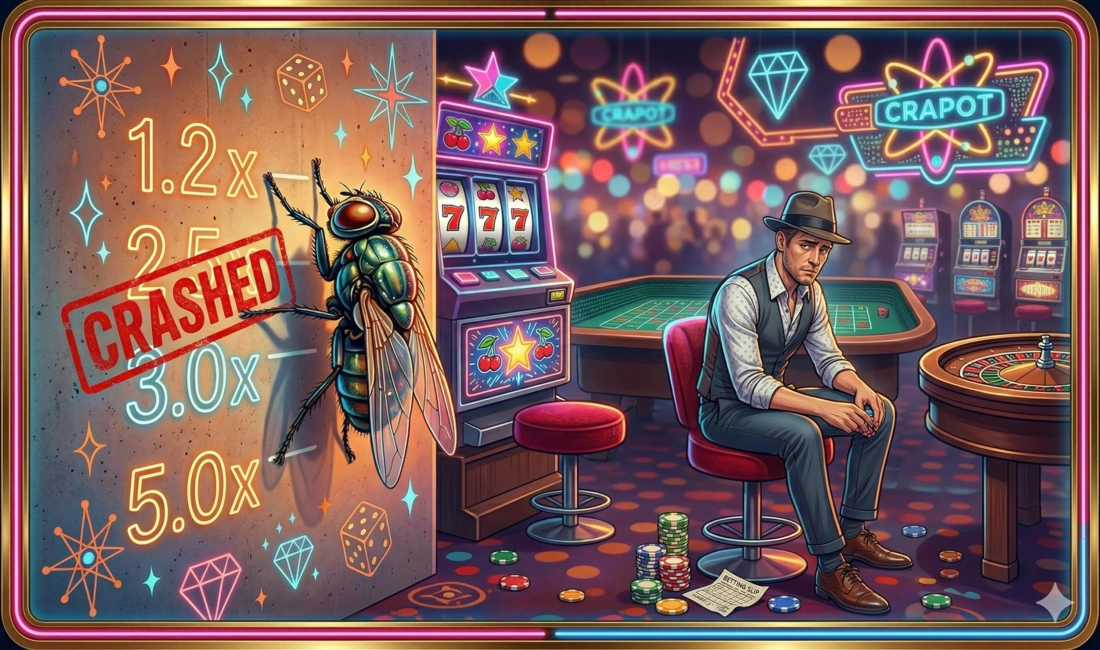
"Crash games. You are literally betting on a fly climbing up a wall and seeing how far it goes before flying off." — Neil Andrews
The Verdict: For a generation raised on high-fidelity video games, the "betting on a rising line" mechanic feels like a step backward into pure abstraction. It’s counter-intuitive because it strips away the "game" and leaves only the "gamble." Yet, its popularity proves that sometimes, players want the math to be the main character, even if the "theme" is as simple as a fly on a wall.
Why Do These "Broken" Mechanics Exist?
If these features feel so strange to experts and players alike, why do they keep appearing in our lobbies? Here are three reasons why "counter-intuitive" often wins over "logical":
1. The "Volatility" Trap
Often, a mechanic feels "bad" because it’s doing heavy lifting for the math. A grid slot without cascades (the "Static Cluster") usually has a higher base-game payout or a more explosive bonus round. The developer is trading "visual flow" for "mathematical weight."
2. Regulatory Constraints
In some jurisdictions, "true" interactivity in bonus rounds is legally complex. This is why the "Illusion of Choice" exists. If the win must be determined by the RNG at the moment of the spin to satisfy a regulator, the "Pick-and-Click" becomes a visual skin rather than a gameplay choice.
3. The Search for the "Next Big Thing"
As Mike Collins noted regarding millions of payways, the industry is in an arms race for bigger numbers. Sometimes, "117,649 Ways to Win" sounds better in a marketing brochure than it feels on a smartphone screen. Innovation often requires breaking the "rules" of what feels natural to see if something new sticks.
Conclusion: The Golden Rule of Slot Design
At the end of the day, a slot machine is a storytelling device. Whether it’s an RPG-style dungeon or a simple line climbing a wall, the mechanics need to tell a story that makes sense to the player’s eyes and wallet simultaneously.
When the visuals promise a cascade but the math delivers a stop, or when a choice feels like a lie, the "magic" of the spin is broken. The most successful games of the next decade won't just have the best math—they will have the most intuitive connection between the player's action and the game's reaction.