Volatile Assets vs. Volatile Games: The 2026 Guide to Managing Double Variance

CEO & Co-Founder
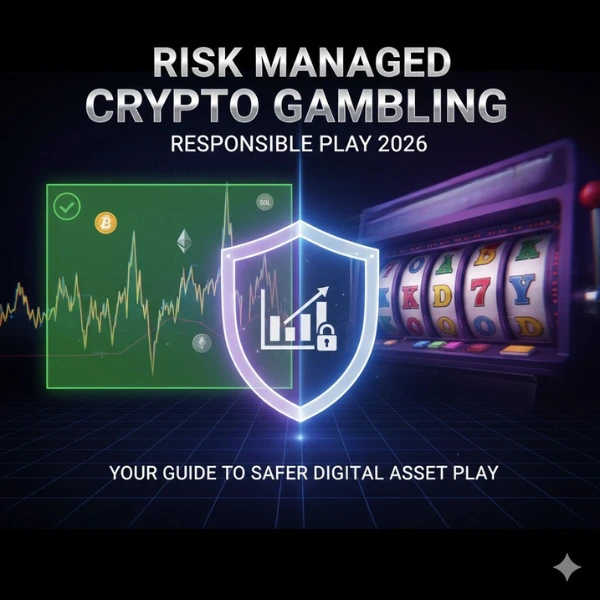
In the decade leading up to 2026, the gambling world underwent a fundamental mutation. We moved from the "Fiat Era"—where a dollar was always a dollar—to the Double Volatility Era. Today, a casino balance isn't just a number; it’s a living, breathing digital asset that fluctuates in value while it sits in your account.
For the modern player, this has changed the very definition of Responsible Gambling. It is no longer enough to simply "set a limit." If you deposit 1 ETH when it is valued at $3,500 and play a high-variance slot, you aren't just battling the 4% House Edge; you are simultaneously exposed to the 15% daily "swing" of the crypto markets. This creates a dangerous psychological feedback loop known as Layered Variance. When the market crashes while you are on a losing streak, the urge to "chase" is magnified by a factor of ten, as players try to win back both their gambling losses and their lost market purchasing power.
To survive the 2026 gambling landscape, you must stop thinking like a traditional gambler and start thinking like a Risk Manager.
1. Understanding the "Double Volatility" Equation
In 2026, we define total session risk using the Multiplicative Variance Formula. When you play a high-volatility slot (where wins are rare but massive) using a high-volatility cryptocurrency, your bankroll is hit by two independent "swings":
Game Variance: The mathematical "swing" of the slot machine’s RNG.
Asset Variance: The price fluctuation of your crypto token on the global market.
The Danger Zone: If you win a 1,000x jackpot in a token that simultaneously drops 30% in value before you can reach the "Withdraw" button, your realized gain is significantly neutered. Conversely, losing a bet while the coin price drops creates a "Psychological Tilt" that leads to 40% more "chase betting" than fiat gambling.
2. 2026 Bankroll Personas: Which Strategy Fits You?
To manage your money effectively, you must decouple your "Game Luck" from your "Market Luck."
The "Unit-Native" (The HODLer)
Philosophy: 1 BTC = 1 BTC.
Strategy: You ignore the dollar value. Your bankroll management is strictly based on "Satoshis" or "Gwei."
Risk Profile: High. You may realize too late that your "fun" session actually cost you significant purchasing power because the coin value spiked.
The "Fiat-Pegger" (The Day Trader)
Philosophy: Maintain a consistent $50 per spin, regardless of crypto price.
Strategy: You use real-time 2026 Betting APIs that adjust your crypto bet size every few minutes to maintain a consistent fiat value.
Risk Profile: Medium. Requires constant monitoring of exchange rates.
The "Stable-Switcher" (The Professional)
Philosophy: Use volatile assets for the "upside," but protect the "wins."
Strategy: Deposit in a volatile asset (like SOL), but immediately convert 50% of any win over 10x into a Stablecoin (USDT/USDC) within the casino vault.
3. The 2026 "Market-Aware" Stop-Loss Strategy
Traditional responsible gambling tools allow you to set a "Loss Limit." In 2026, you need a Market-Aware Limit.
The 10% Rule: If your gambling asset (e.g., Ethereum) fluctuates more than 10% in either direction during your session, stop playing.
On the Upside: You have gained purchasing power without spinning. Lock in the profit.
On the Downside: Your bankroll has shrunk. If you keep betting the same "Unit Size," you are now betting a higher percentage of your net worth than intended.
4. Practical Tips for "Safe Digital Asset Play"
Check the Beta: Before choosing a slot, check the coin's 24-hour volatility. If the market is "bleeding," stick to Low-Volatility games (Blackjack, Baccarat) to preserve your coin count.
Avoid "Bonus Buys" on Meme Coins: High-cost bonus buys on ultra-volatile tokens like PEPE are the fastest way to hit zero. The "Double Variance" here is statistically unsustainable.
Utilize Casino Vaults: Most reputable 2026 casinos offer an internal "Vault." Move winnings there immediately to decouple them from your "Active Play" balance.
Conclusion: Mastering the 2026 Mindset
As we navigate the complexities of 2026, the line between "Investing" and "Gambling" has thinned. The most successful players are those who respect the Independence of Events. A winning spin is a hollow victory if that profit is eroded by a market dump you failed to prepare for.
Responsible gambling today is a two-front war: you must fight the urge to over-bet on the screen, and you must fight the urge to ignore the volatility of the wallet. By using Stablecoin Vaults and strict Market-Aware Stop-Losses, you remove the emotional weight of the "Double Loss." Remember: the house wants you to be distracted by the flashing lights and the fluctuating coin prices. Reclaim your edge by treating your bankroll as a professional asset. Play with clarity, respect the variance, and never let a volatile market dictate a desperate bet.
Frequently Asked Questions
Everything you need to know about this guide
About the Author
CEO & Co-Founder at Chase the Scatter
Former professional tennis player turned casino industry expert with over 10 years of experience in iGaming. Previously an operator at NOVOMATIC and Stanleybet Group, Borna now leads Chase the Scatter, delivering honest, data-driven slot reviews and expert gambling guides backed by real industry knowledge.